Leontios ToumpourisA disappearing act, an erroneous camouflaging
13 May – 27 June 2026
How to disappear completely and never be found. The promise is vast. Yet, as Doug Richmond suggests, it seems difficult to remove oneself entirely without disappearing, to dissolve without leaving a trace. Every attempt encounters resistance. To conceal oneself, to blend in, to dissolve into the landscape: these gestures presuppose a world capable of absorbing without remainder. And yet nothing truly disappears once it is present in the world. Something always remains: a trace, a displacement, a persistence. What withdraws does not cease to exist, but changes state, somewhere between latency, murmur, and diffuse background.
It is within this interval that Leontios Toumpouris’ works unfold. Drawing on an open archive of photographic documentation and a practice of gathering, the artist brings together a body of recent and newly produced works that interrogate connection, growth, and development. Constructed from fragments — found images, repeated forms, shaped materials — these works do not seek to stabilize an image of the world, but to reveal its shifts, interferences, thresholds, and zones of friction.
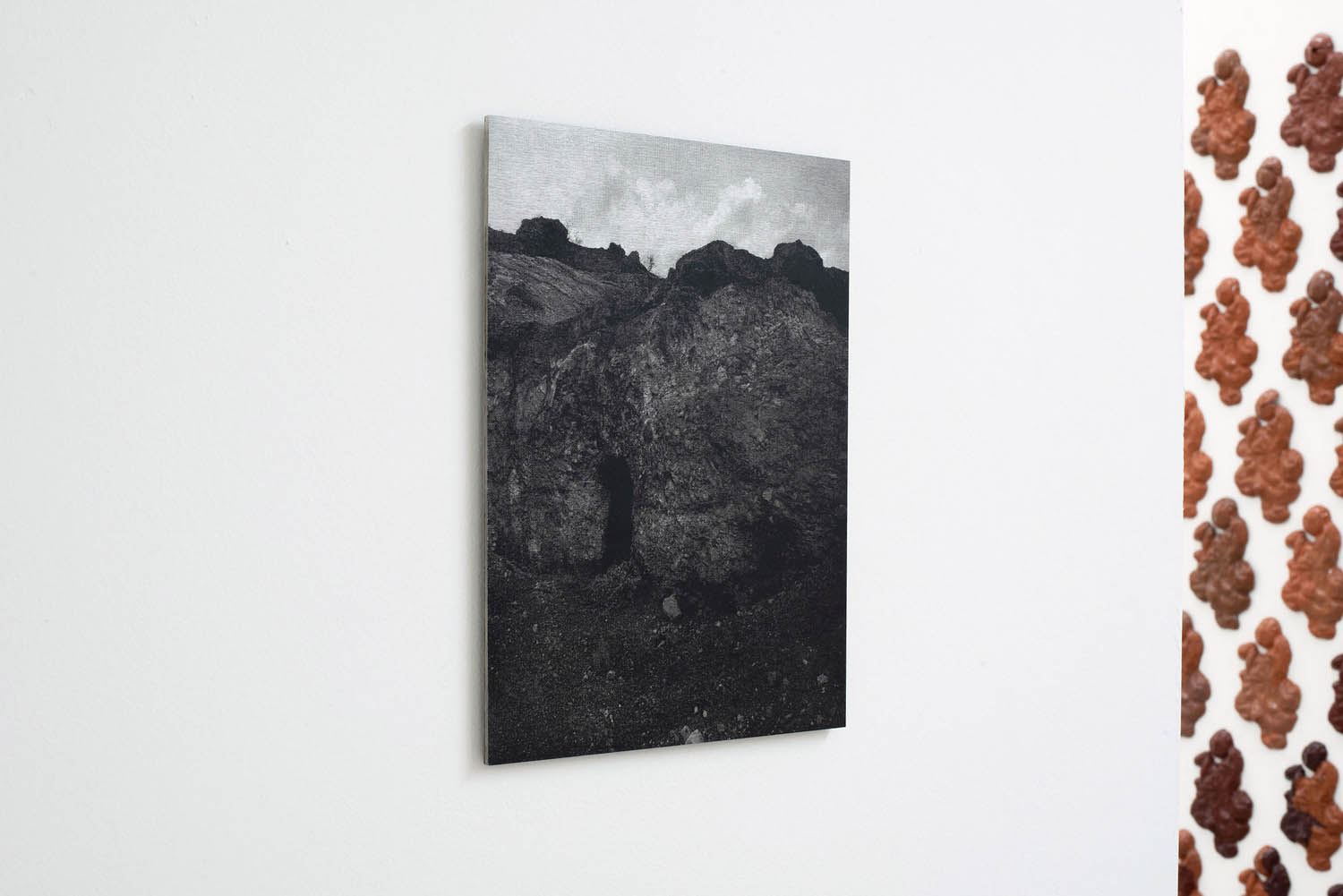
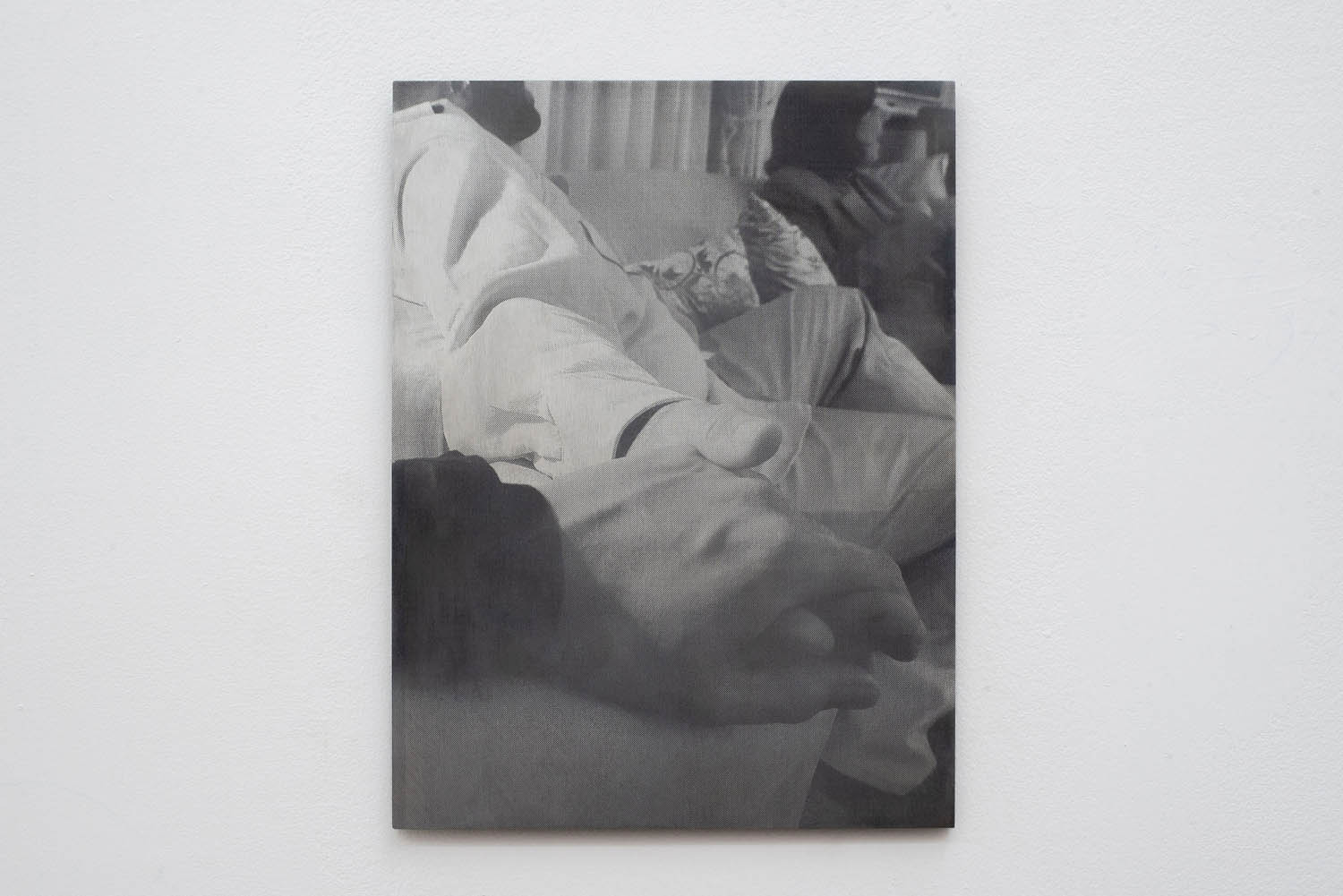
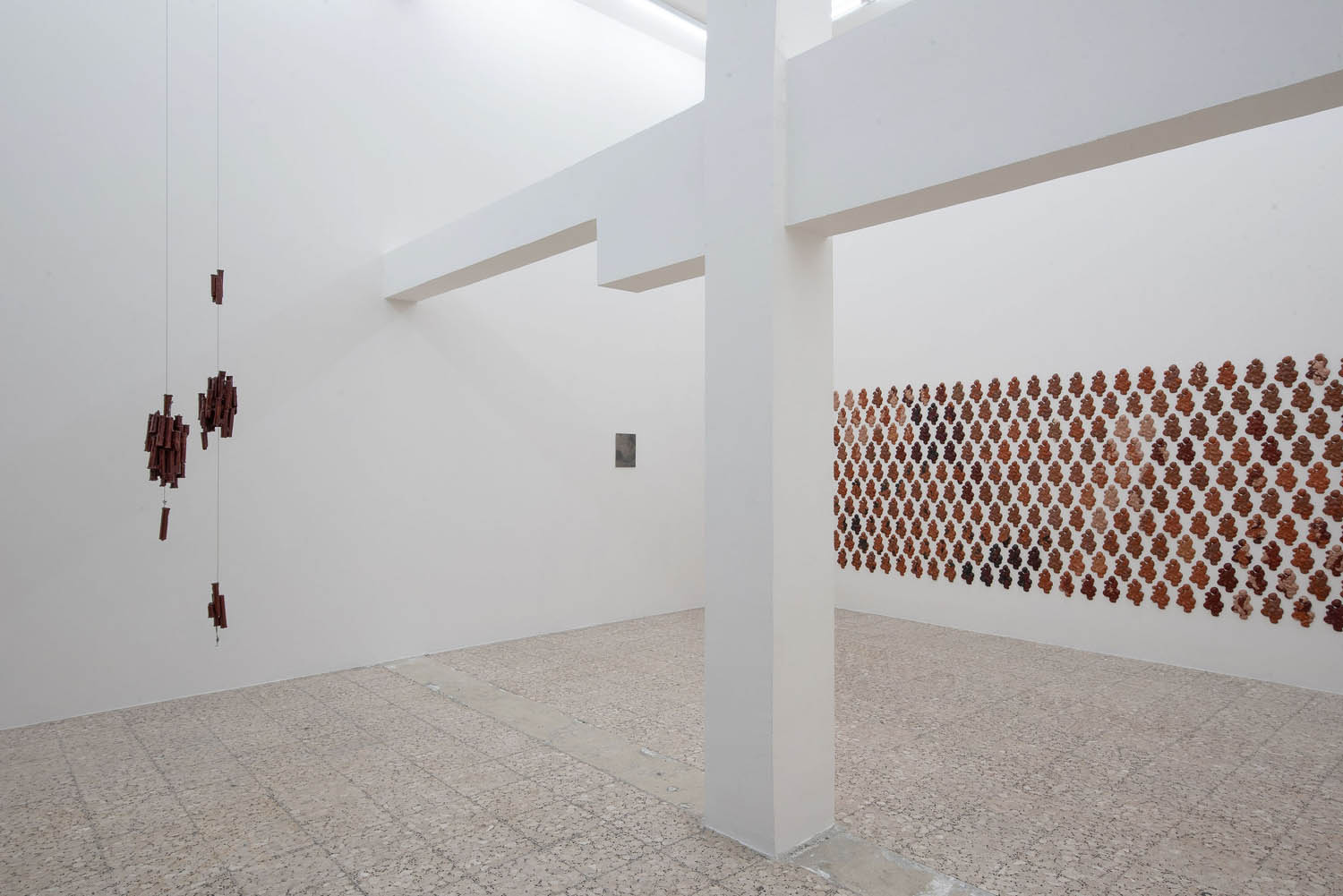
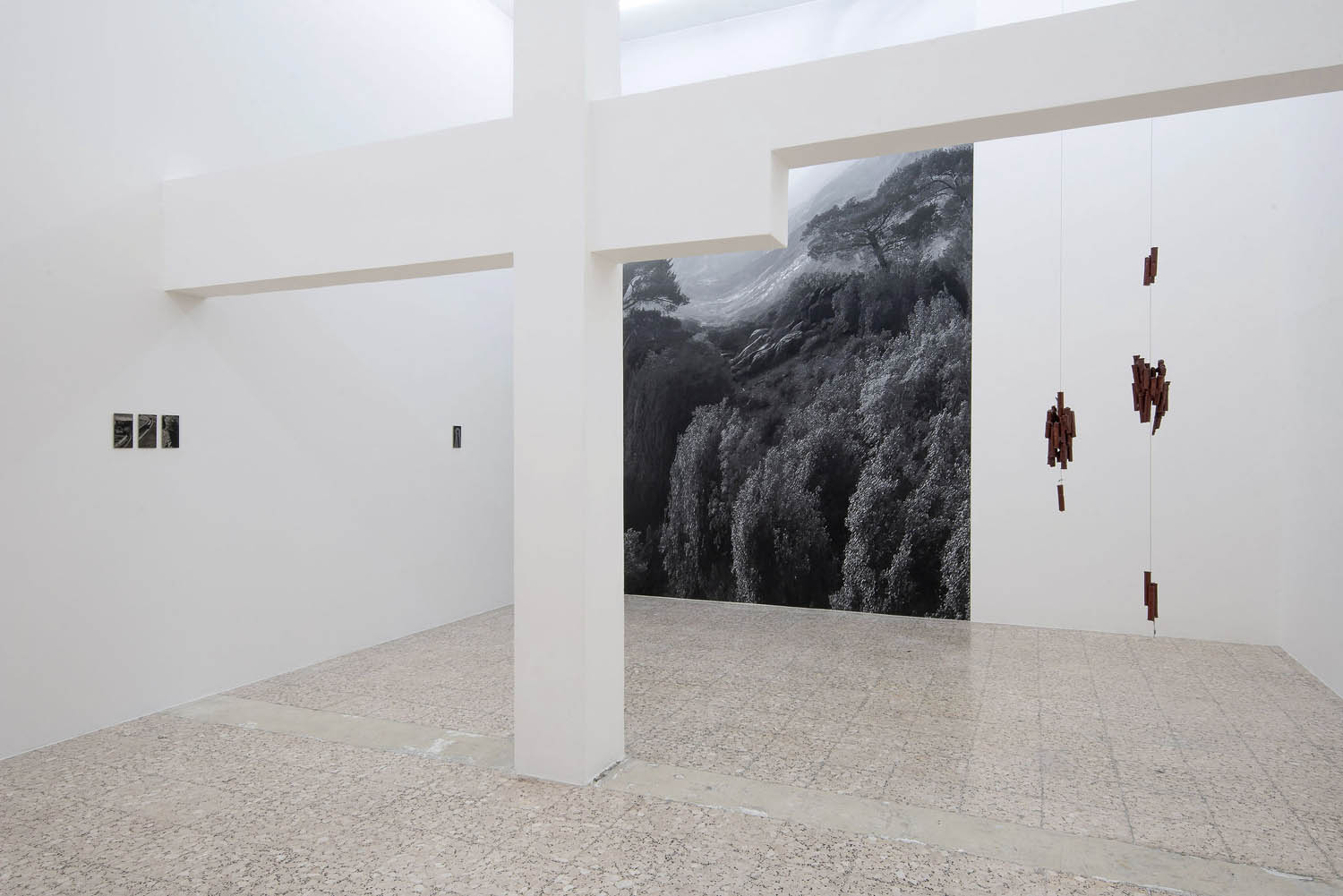
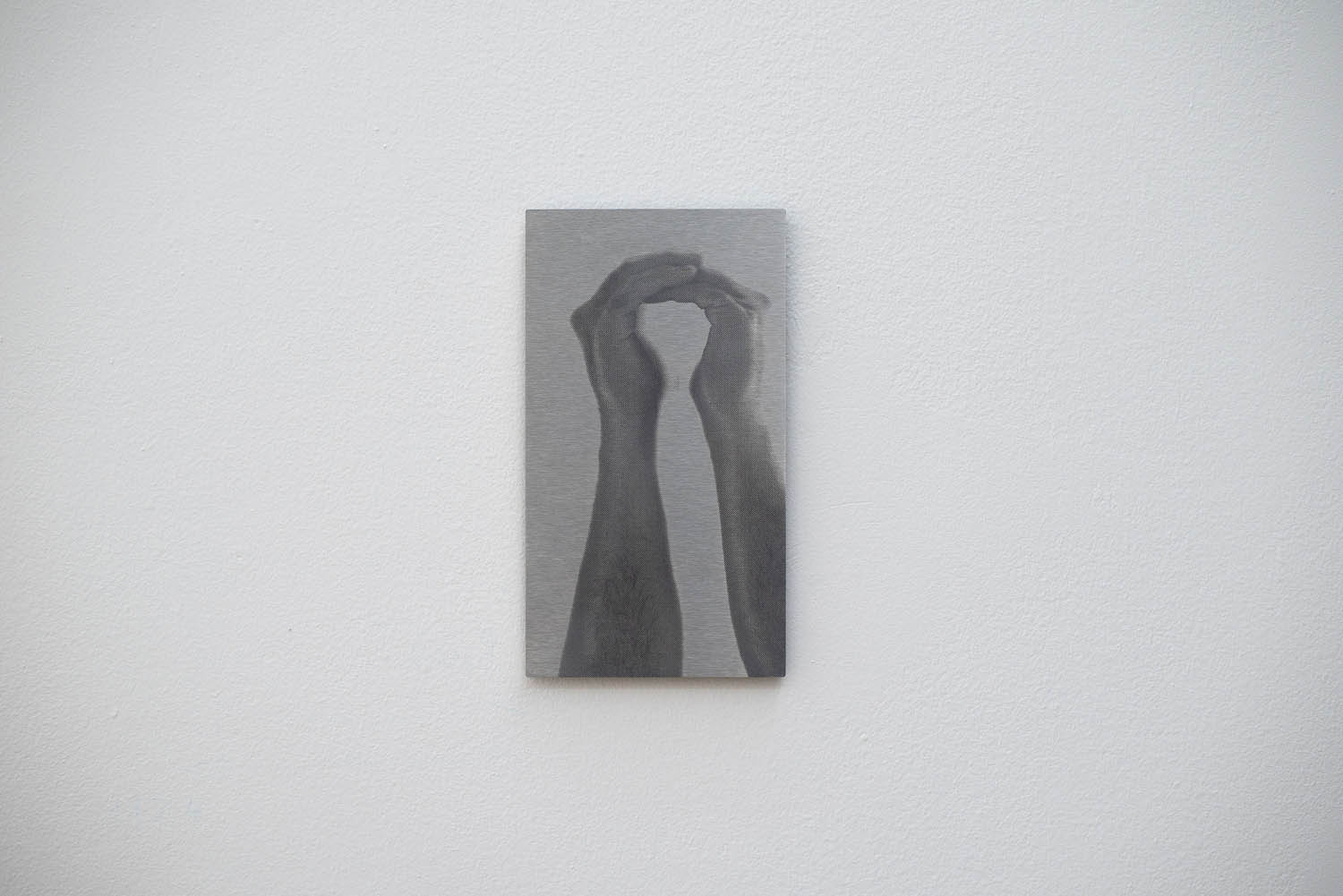
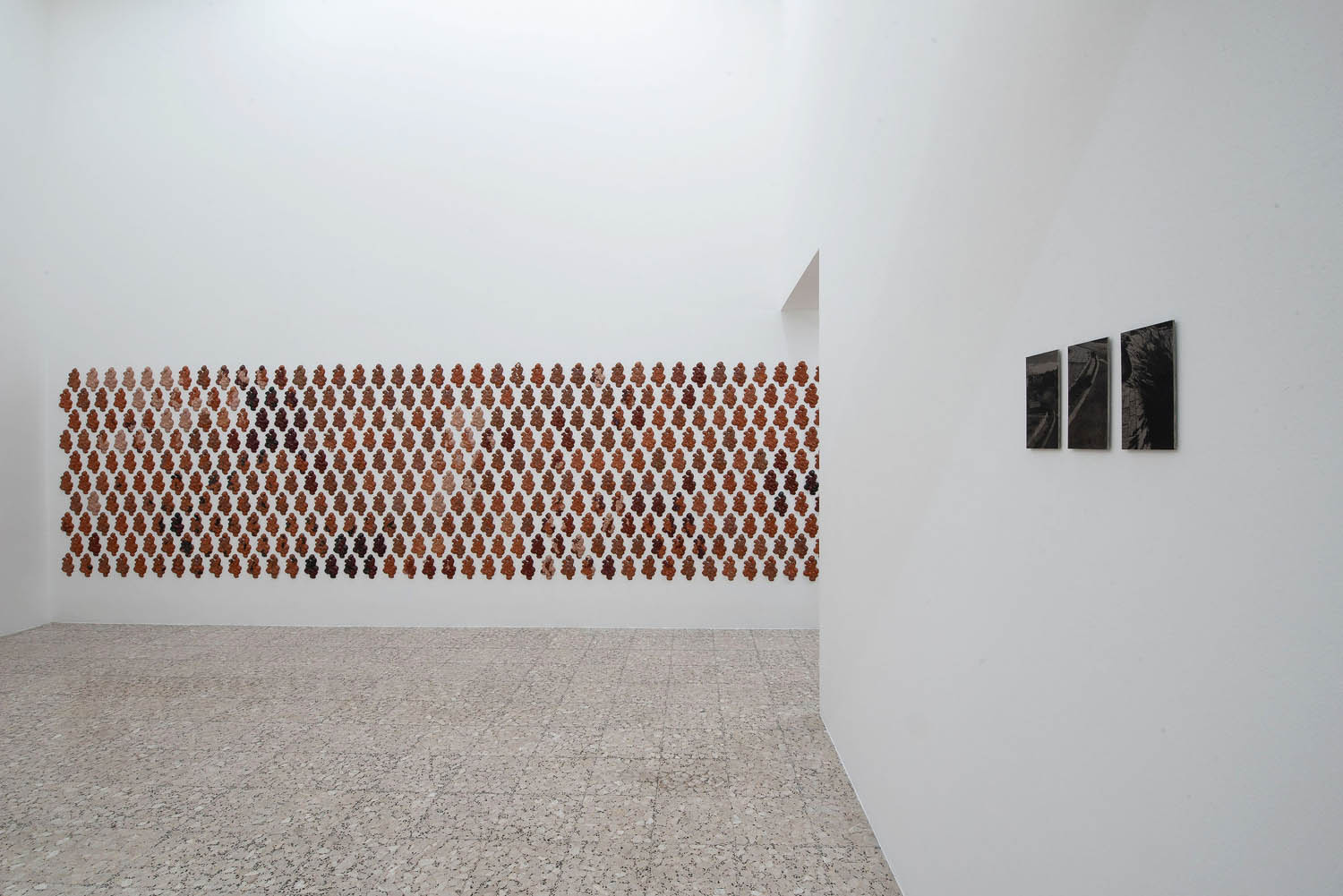
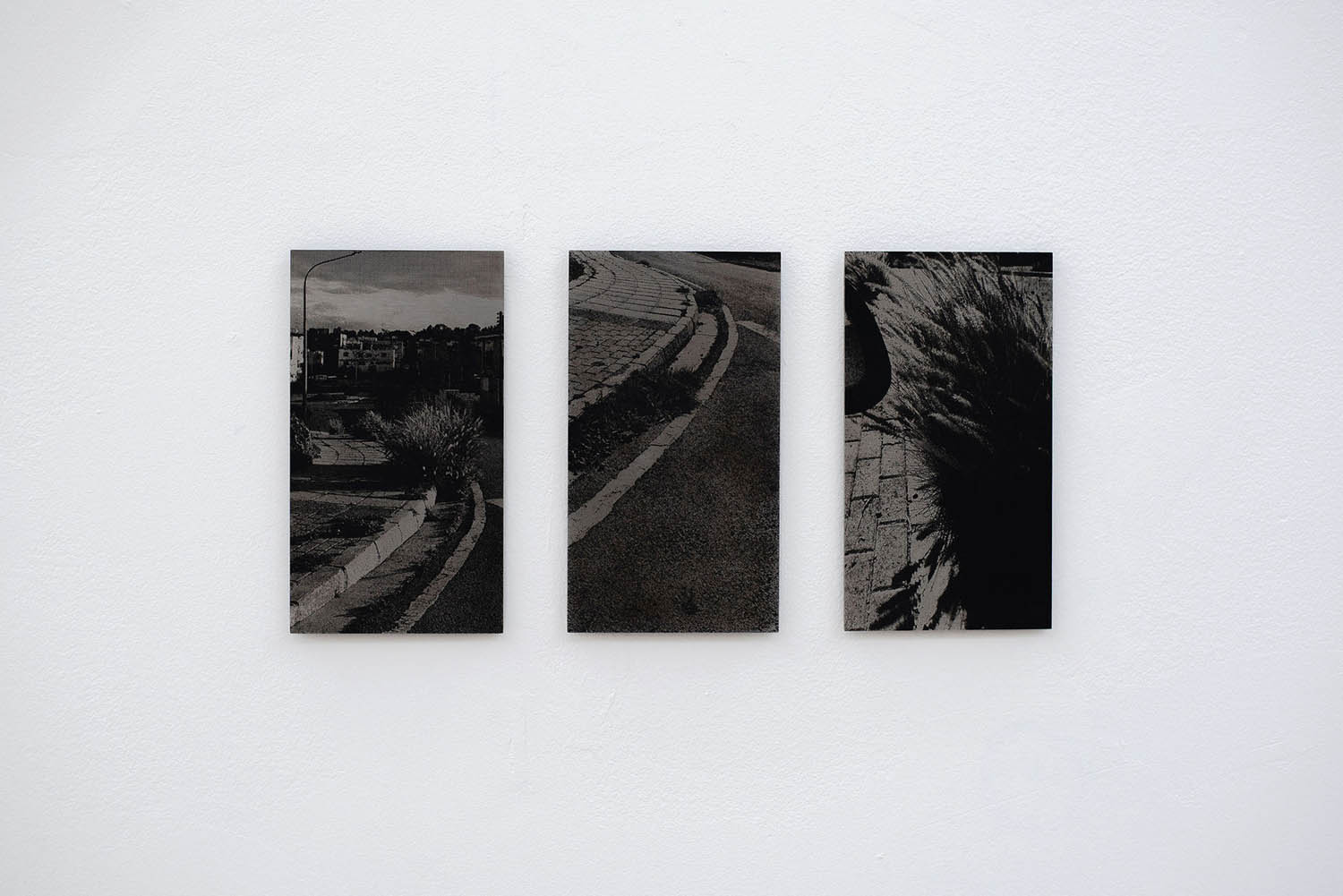
Presented on the wall, laser-engraved photographs on stainless steel and covered with printmaking ink or printed on paper and glued on the wall depict motifs of hands, cavities, and plants. Here, images do not document. Distorted, painted, filtered, enlarged to the point of disorientation, they displace perception. Looking then requires a shift — one that demands the abandonment of identification.
A cut plant grows back at the roadside. Marginal, undesirable, it persists. Its interrupted and then resumed growth becomes a figure of resistance: between domestication and excess, between constraint and vitality. Nearby, hands support or restrain. The gesture oscillates between protection, containment, and limitation. Nothing is univocal.
Plants, hands, and cavities participate in the same movement: to persist despite erasure, to grow despite interruption, to appear at the moment of withdrawal. Landscapes, altered to the point of becoming unrecognizable, detach from any precise location to activate emotional and psychic dimensions. Nature is no longer backdrop but condition: a field of forces in which the body inscribes itself, loses itself, then reconfigures.
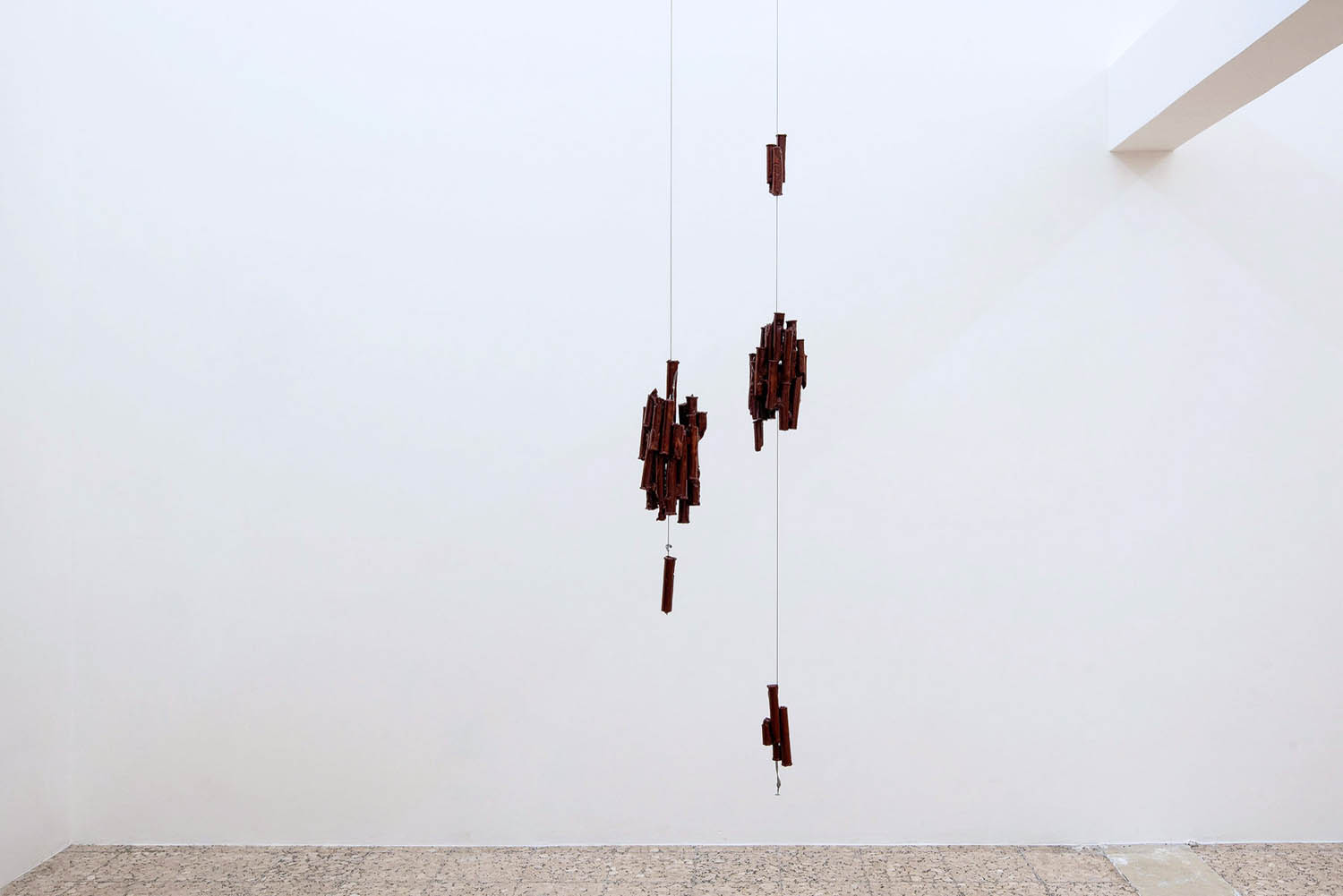
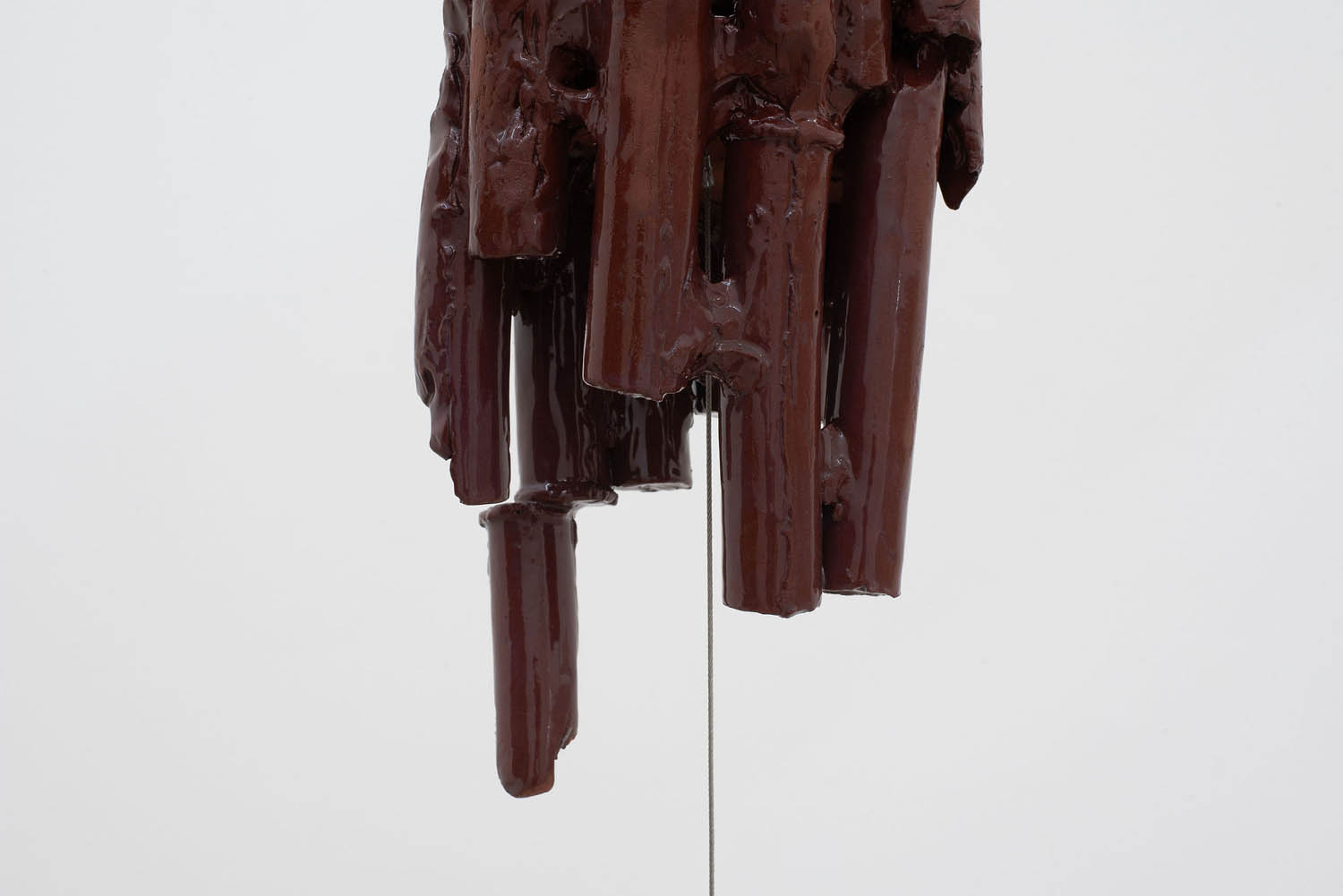
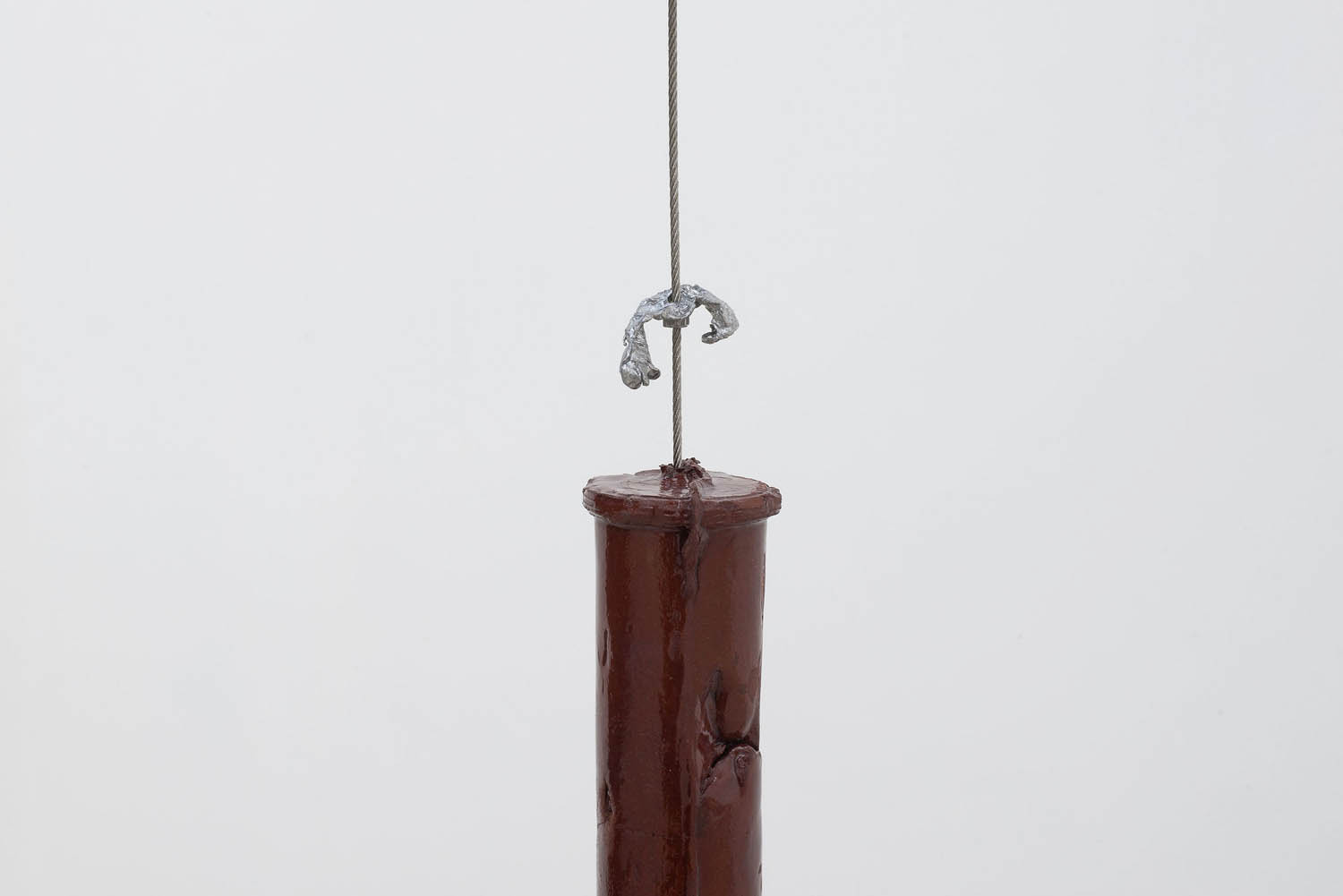
Some works extend these tensions toward the body, caught within its own regimes of performance. Fragments of vitamins and electrolytes packaging, recomposed, welded, traversed by gestures drawn from molybdomancy, displace the signs of care.
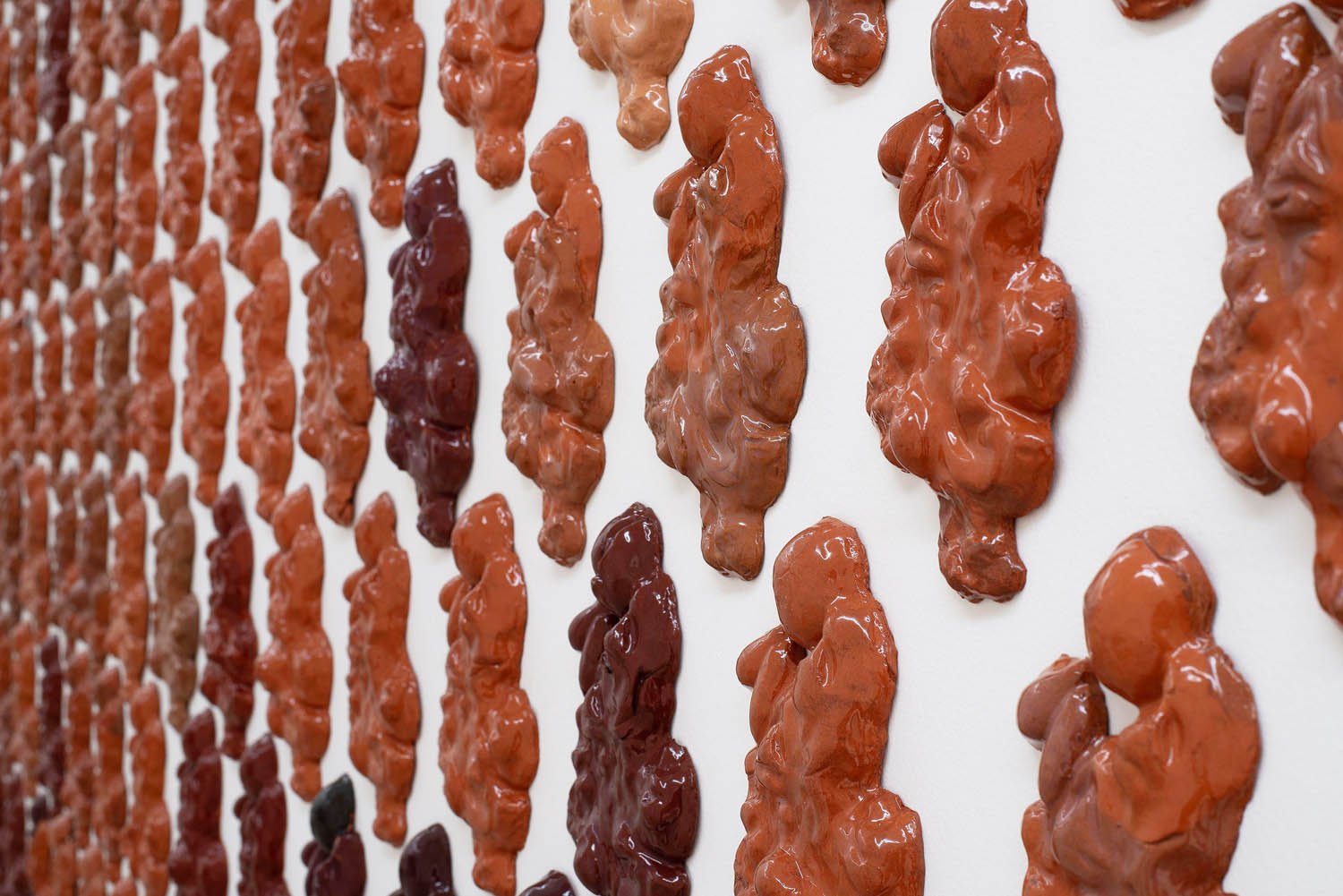
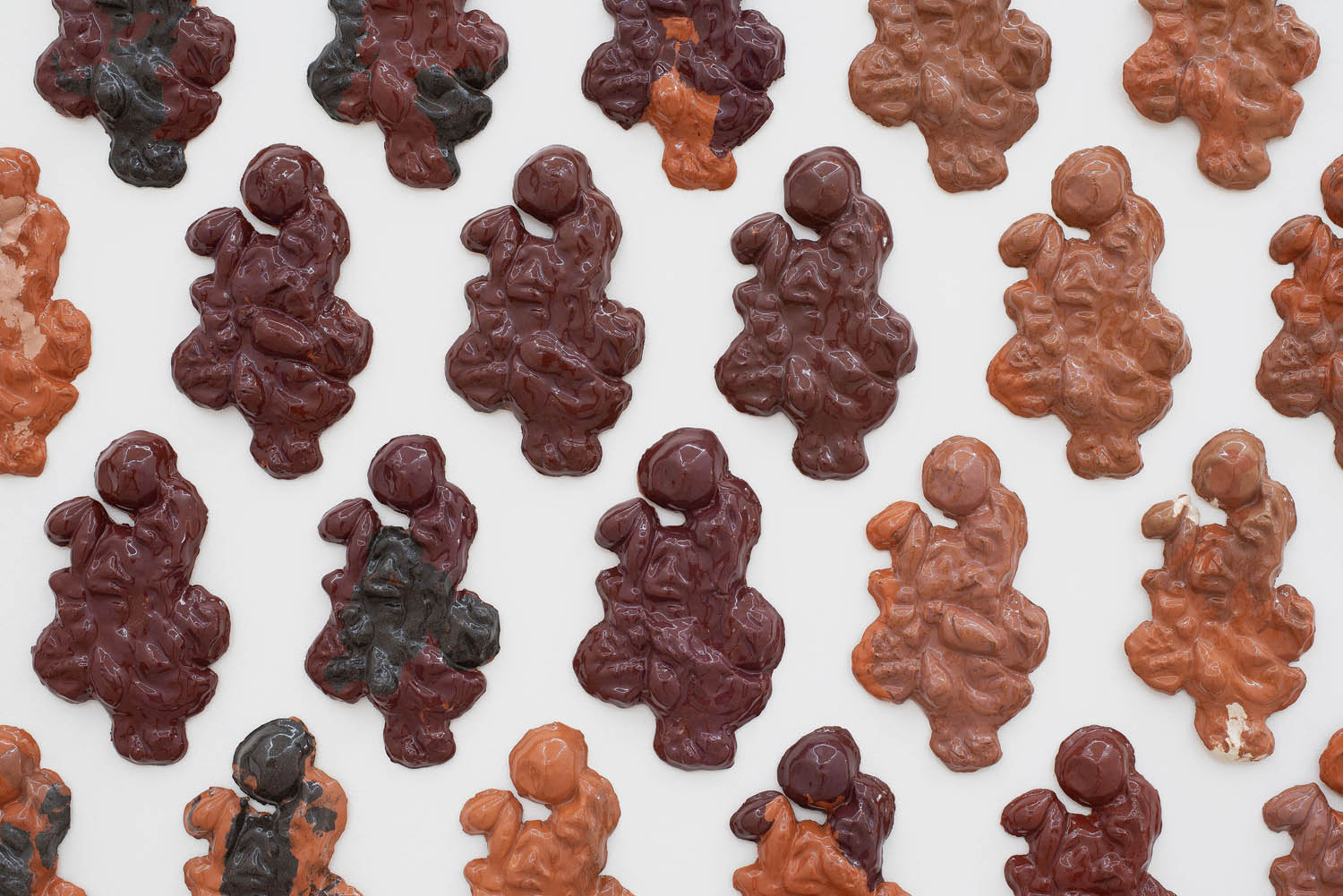
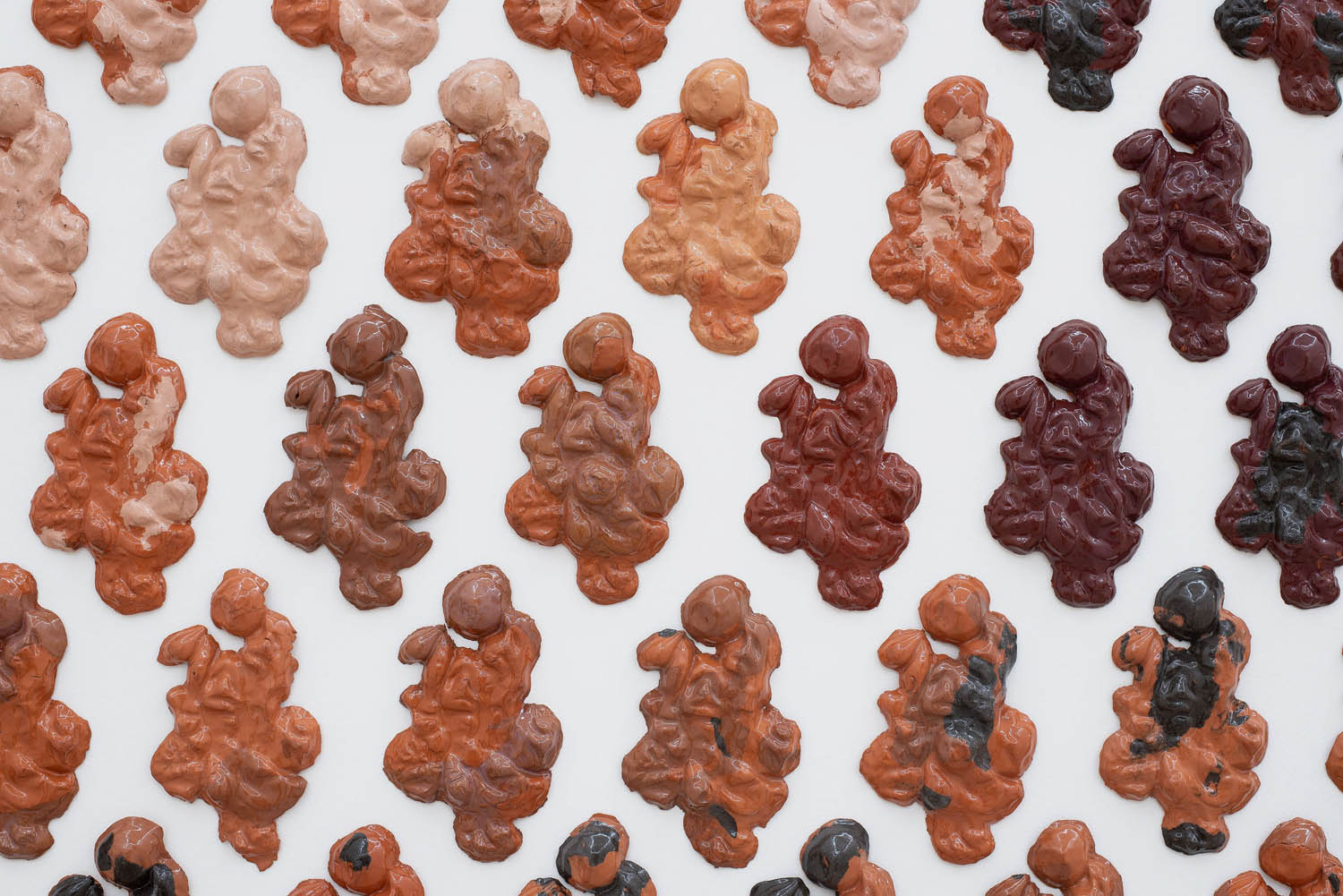
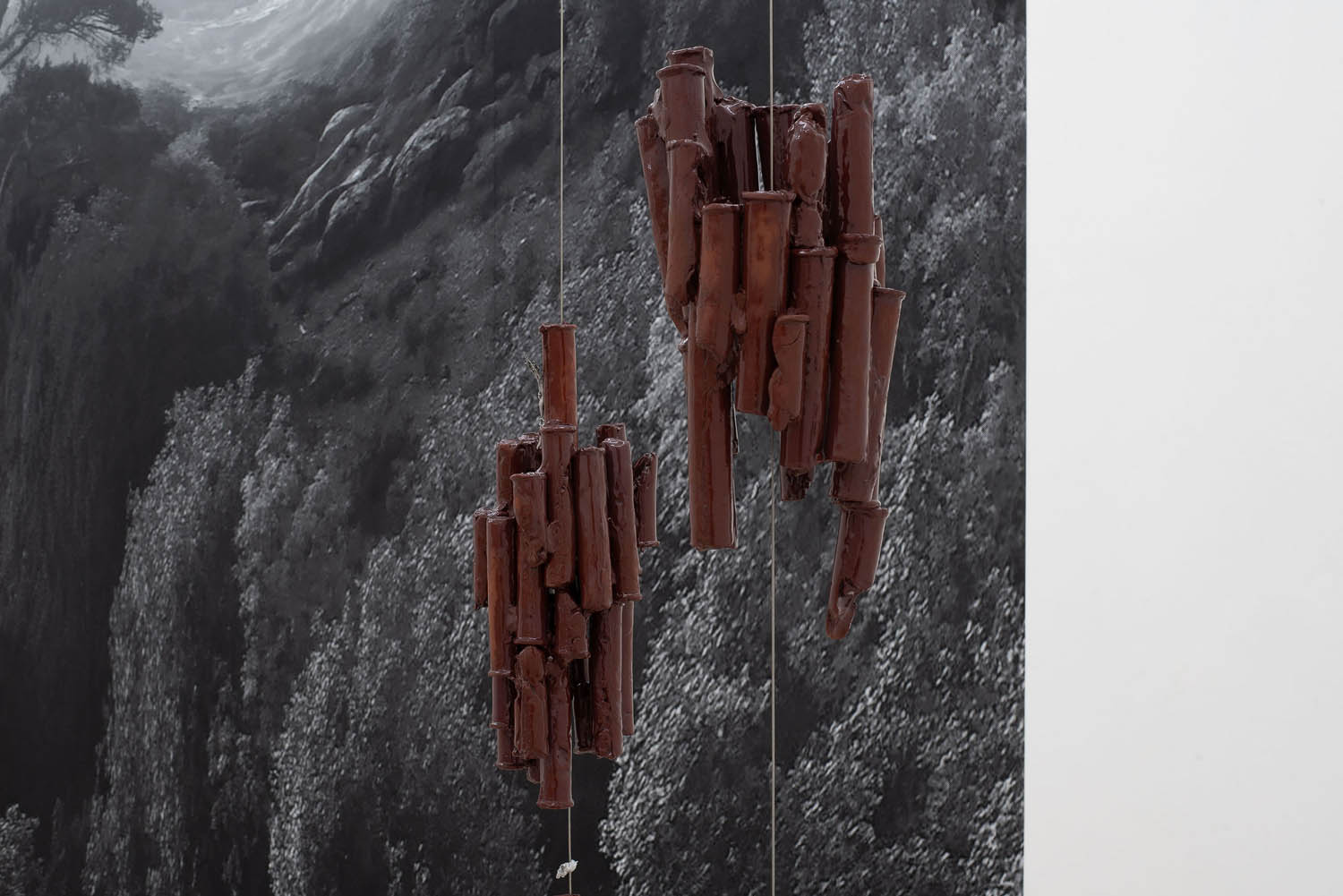
Further on, over four hundred ceramic pieces compose an ensemble in which each element resembles the next without ever coinciding. Repetition, at the core of the work, stabilizes nothing; it opens a gap. Minute variations propagate, organizing subgroups and constellations. Like dormant bulbs, these forms suggest suspended time, where waiting and synchronization call for an expanded and attentive mode of listening.
Multiplicity is not accumulation but a condition of existence: being alone while being together. This process becomes a mode of attention, revealing what is being transformed quietly, below the threshold of noise. What is fragile is not necessarily weak; what is marginal is not destined to disappear. The point is neither to produce stable forms nor to fix an identity, but to inhabit a state of transition, fluctuating between visibility and erasure, belonging and withdrawal, persistence and exhaustion. To inhabit instead the tipping point: the moment when something appears, briefly persists, then dissolves without entirely disappearing.
In this context, hiding becomes an uncertain operation. The exhibition offers no solution. It insists on the failure of every attempt at camouflage. Something always exceeds containment. A form reappears, growth resumes, an image resists. A fragile presence, dependent on a quiet insistence, reveals and stabilizes something that remains — precisely because it escapes. A disappearing act, an erroneous camouflaging.
Ludovic Delalande